





Weaving patterns for privacy strips
The weaving rhythm shapes the entire fence.
During installation, privacy strips are woven alternately in front of and behind the vertical bars of a twin-wire mesh panel. The chosen rhythm determines the visible pattern, the appearance on both sides and how tightly the strip sits in the mesh.
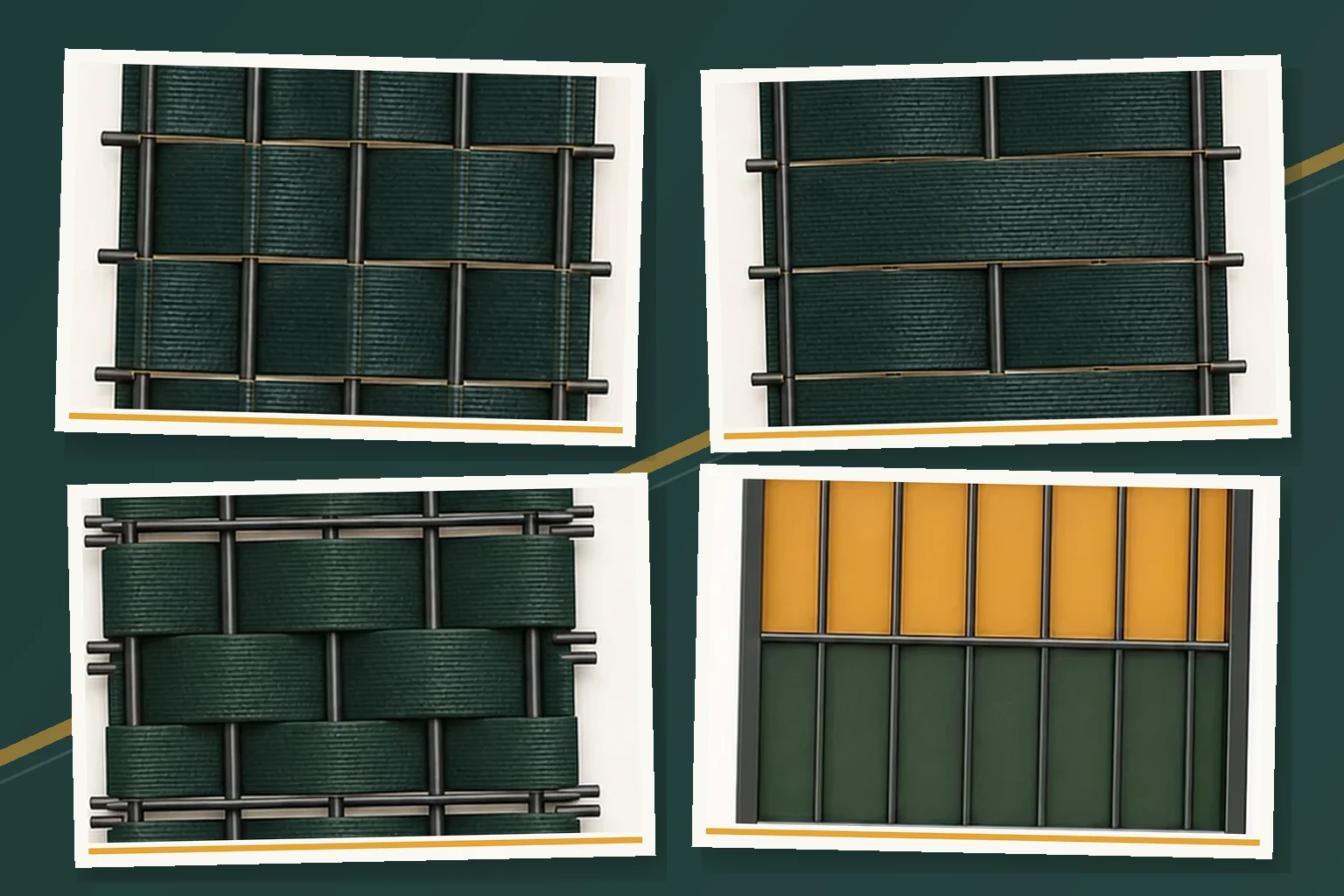 Product image partially AI-generated
Before you start
Consider appearance and fit together.
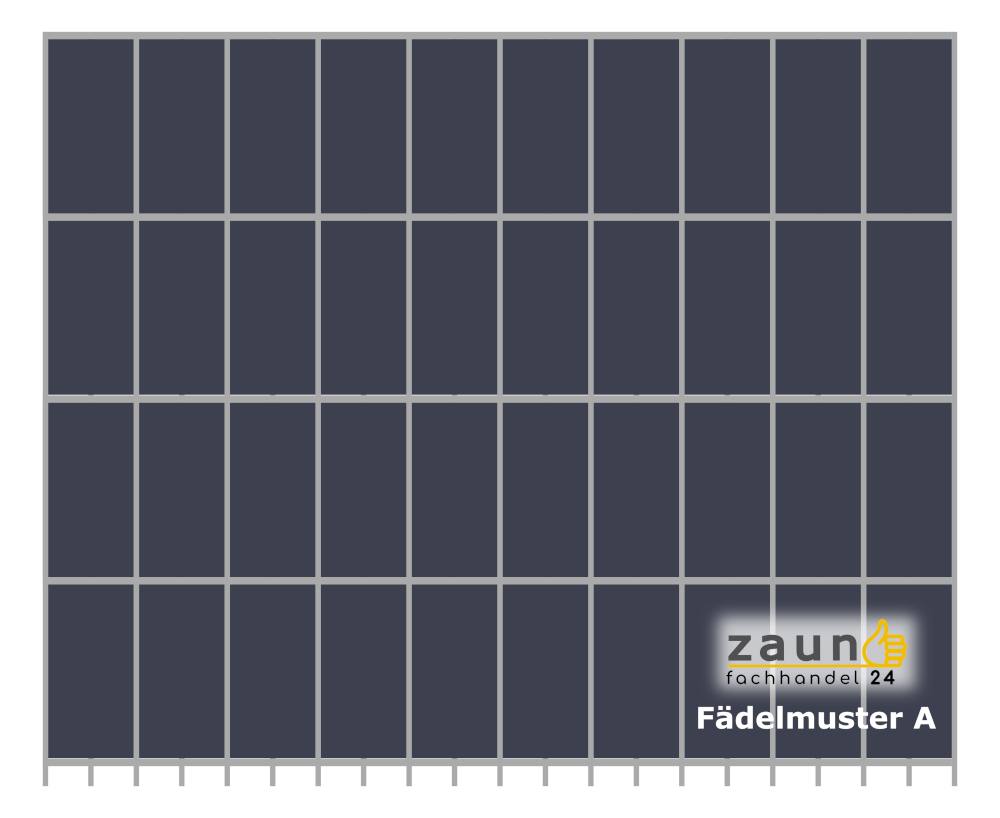
Uniform
All rows follow the same rhythm, creating a calm and continuous fence design.
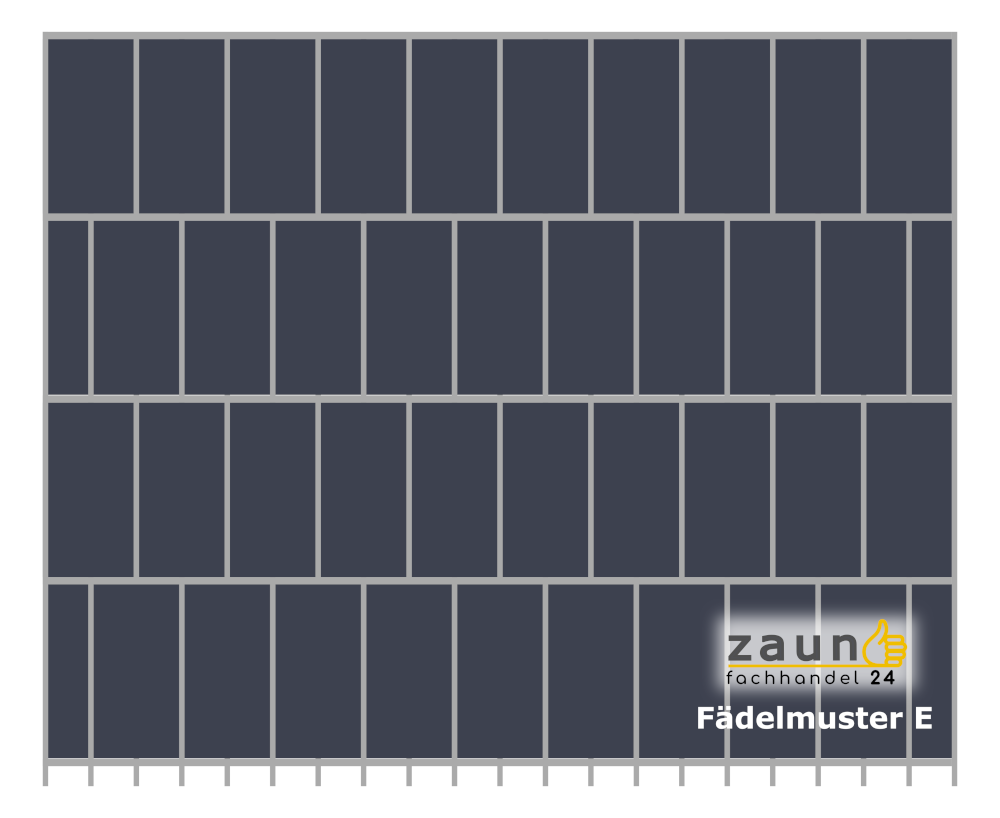
Offset
Every second row starts in reverse, creating a more lively woven appearance.
Consider the material
Rigidity, material thickness and the intended fastening method affect the fit. Always follow the information for the selected product.
Basic patterns & offset rows
Compare six weaving patterns directly.
A to D follow a uniform pattern. E and F use familiar rhythms but offset every second row.
Pattern AOne bar in front, one bar behind
The privacy strip changes sides at every vertical bar. This creates a tight, even weave. Installation takes a little more work, but the strip generally sits particularly firmly in the mesh.
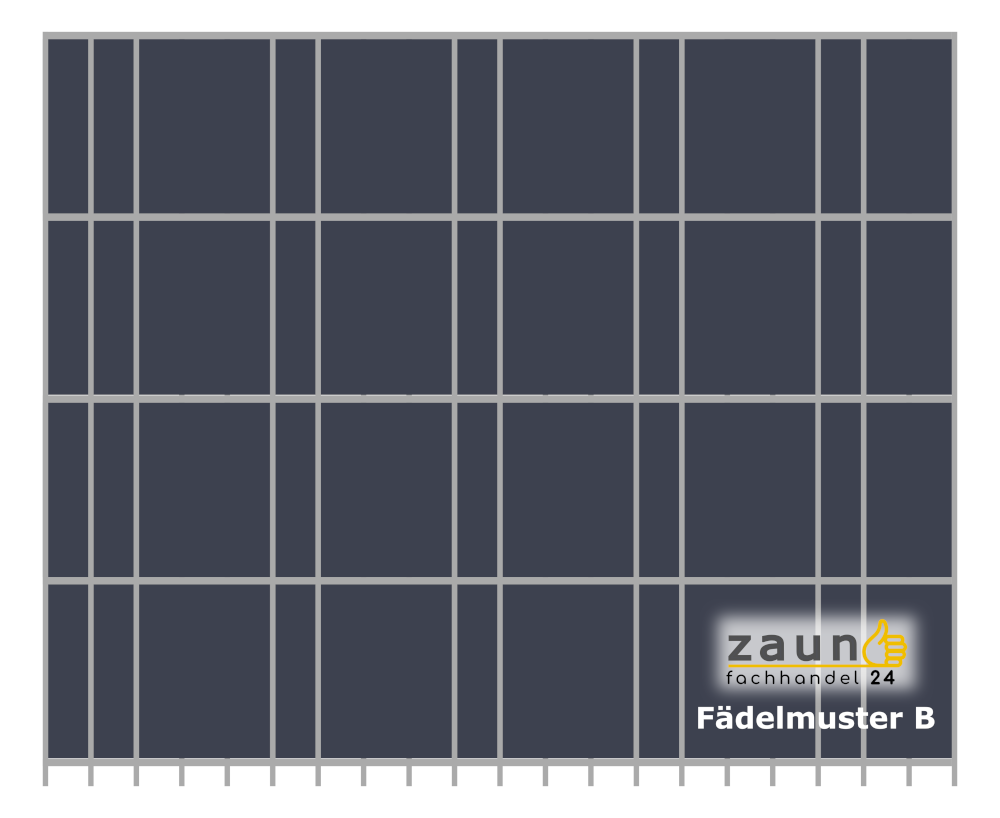 Pattern B
Two bars in front, two bars behind
Pairs of vertical bars remain visible alternately in front of and behind the strip. This pattern combines a clean appearance with straightforward installation and looks even on both sides.
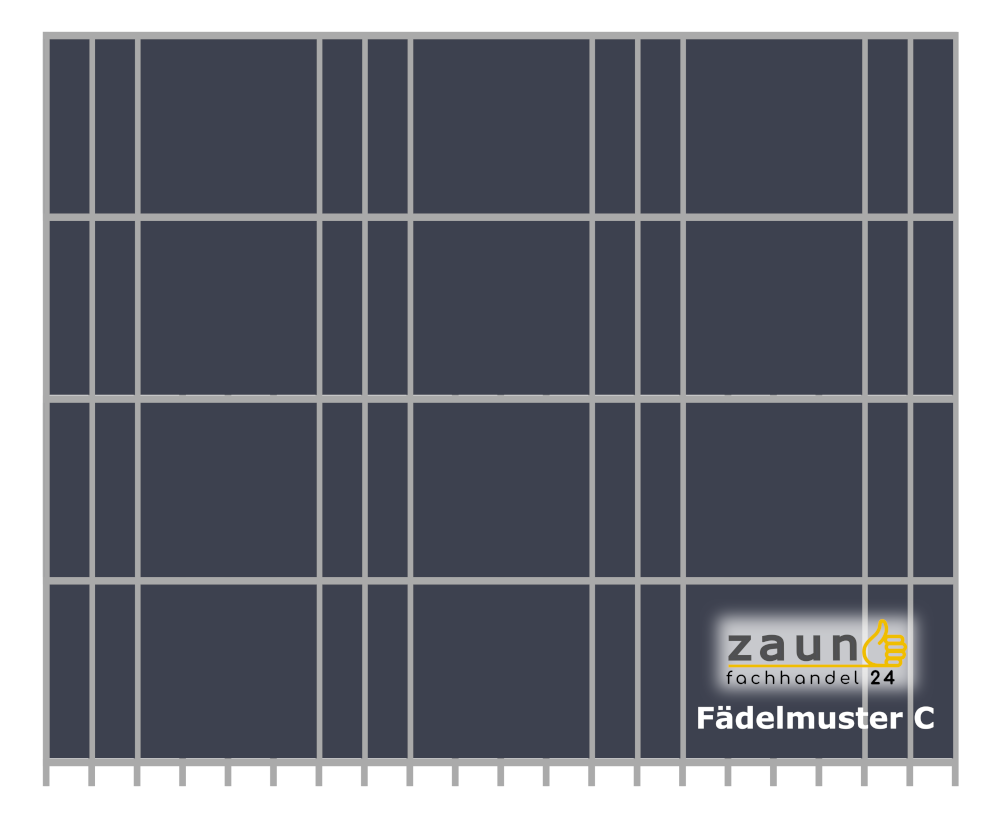 Pattern C
Three bars in front, three bars behind
Larger visible sections create a broad pattern and make weaving easier. The strip may sit more loosely, so longer sections should only be used when the material and fastening method are suitable.
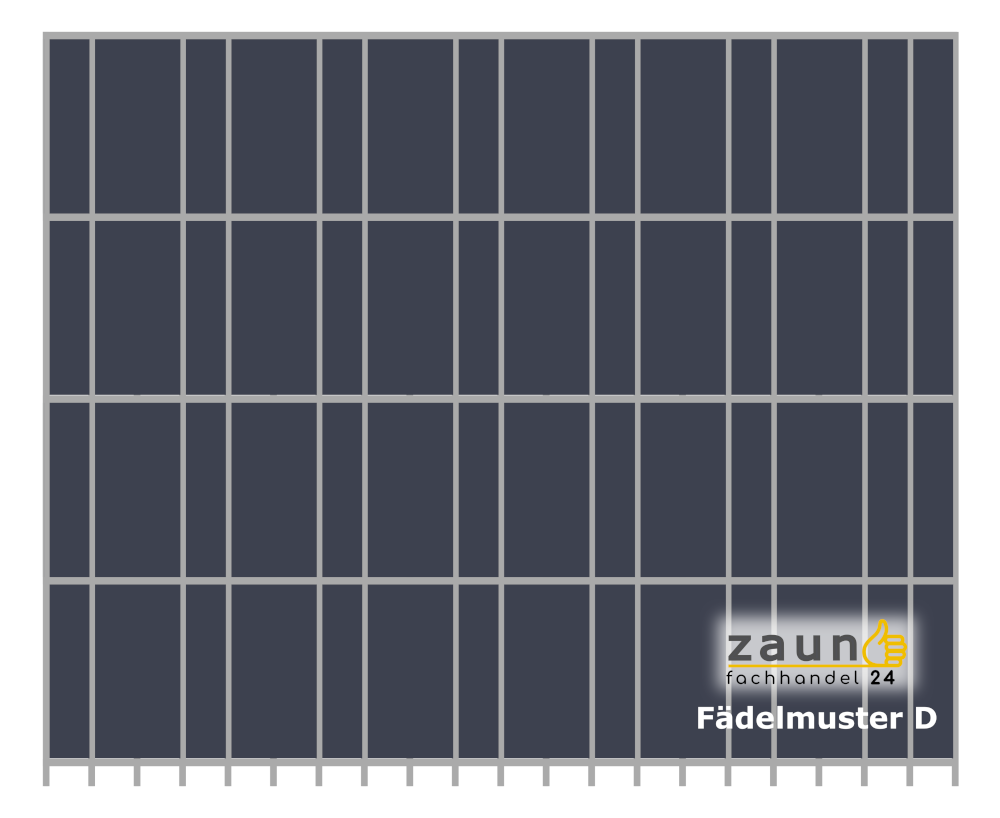 Pattern D
One- and two-bar sections combined
Short and long sections alternate within one row. On one side the strip may pass in front of one bar and behind two; the rhythm appears reversed on the other side.
Pattern ESingle-bar rhythm, offset by row
As in Pattern A, the strip changes sides after each bar. The sequence is reversed in every second row, regularly alternating visible and covered bars.
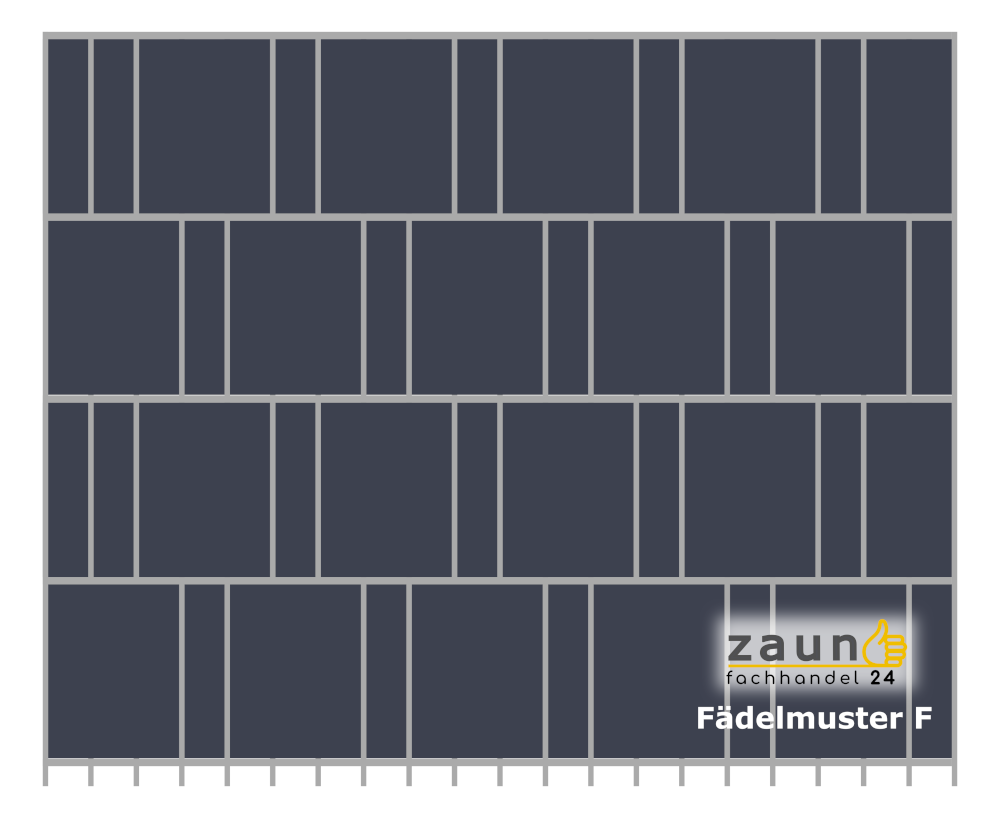 Pattern F
Two-bar rhythm, offset by row
This is based on the two-in-front, two-behind rhythm of Pattern B. Offsetting the start of every second row creates a balanced weave on both sides.
Purposeful accent rows
Let one row break the pattern.
In G and H, only one selected row differs from the basic pattern. This divides the fence visually using a different rhythm or an additional colour.
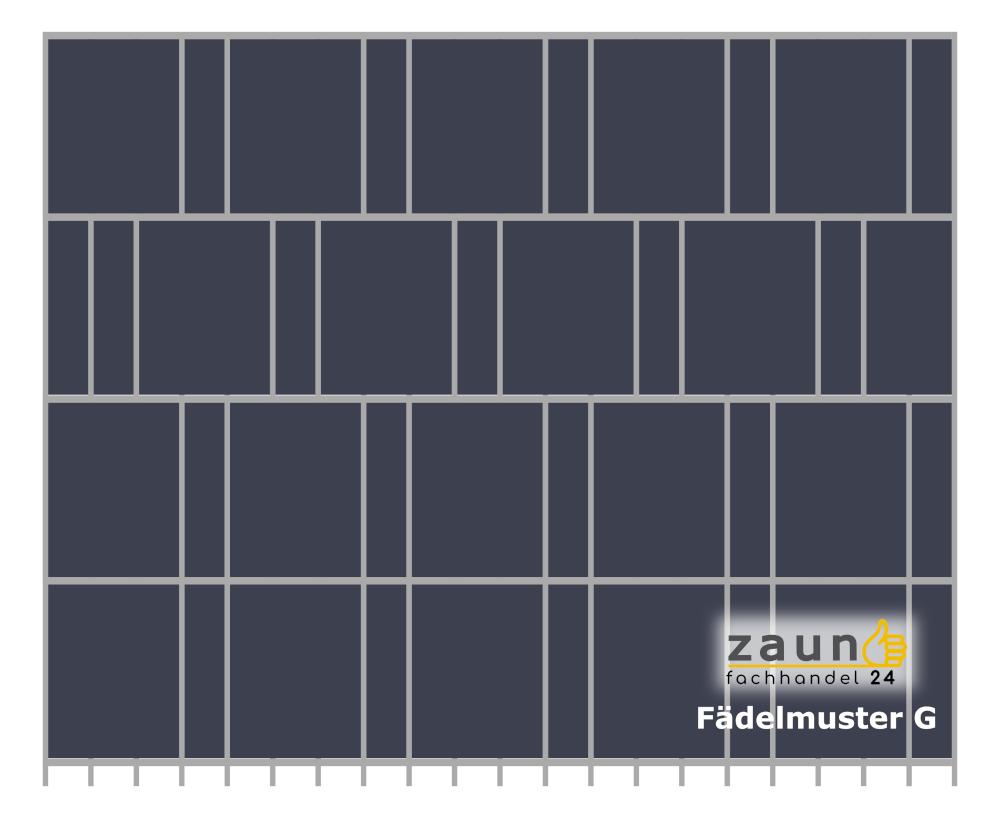 Pattern G
Offset row in a two-bar pattern
Most of the surface follows Pattern B. A single row starts offset, creating a subtle horizontal accent line.
 Pattern H
Combined rhythm as an accent
The basic pattern follows the single-bar rhythm. Short and long sections are combined in the accent row, creating a more distinct interruption.
Bildquelle A–H: Zaunfachhandel24 – Privacy screen strips-Weaving patterns.
Halves, thirds & quarters
One fence row. Many possibilities.
A 19 cm row can contain either one full strip or a combination of equal-height partial strips. Each strip follows the selected weaving rhythm in front of and behind the vertical bars.
One row accommodates 1 × 19 cm, 2 × 9.5 cm, 3 × approx. 6.3 cm or 4 × approx. 4.7 cm. The dimensions and guidance for the selected product remain decisive.


Perforatede Aufteilungen
Points of light within the same 19 cm row.
Perforated privacy strips can fill a complete row or be combined with suitable partial formats. The perforation changes the appearance, not the total height of the division.
Full-width perforated strip
A perforated 19 cm strip fills the complete horizontal row while allowing points of light through.
Two perforated halves
Two perforated half-width strips together fill the complete 19 cm row.
Quarter, perforated half, quarter
Ein perforated Halbformatstreifen liegt zwischen zwei geschlossenen Viertelstreifen.
Accents within one row
Three accent widths, used individually or in combination.
Accent strips replace individual sections within a 19 cm row. The remaining height is filled with matching base strips.
Half-width accent strip
A 9.5 cm accent strip is woven into the same row with a second half-width strip.
Third-width accent strip
A 6.3 cm accent sits between two further third-width strips in one row.
Alternating quarter accents
Two yellow 4.7 cm accent strips alternate with two dark quarter-width strips within the 19 cm row.
How to proceed
Erst aufteilen, dann flechten.
- Aufteilung wählenChoose halves, thirds, quarters or a suitable combination for one 19 cm row.
- Accent platzierenPosition the individual accent strip at the top, centre or bottom of the row.
- Rhythmus anwendenJeden Teilstreifen innerhalb derselben Reihe im gewählten Grundmuster einfädeln.
Important information on wind and structural loads
Closed privacy surfaces increase the wind forces acting on mesh panels, posts and foundations. A tight weaving rhythm does not replace a structural assessment. At exposed locations, with tall fences or in case of uncertainty, a specialist should assess whether the existing fence is suitable.
Find suitable products